Earth First: The sustainable side of mushroom supplements
Mushrooms can be eco-friendly, low-impact and regenerative for the planet, making them ideal for those who care as much about the Earth as they do their health.
Contents
- Why are mushroom supplements suddenly everywhere?
- How do mushrooms grow differently from traditional crops?
- Can mushroom farming go beyond “sustainable” and actually repair soil and ecosystems?
- What role do mycelium networks play in restoring balance to our planet’s systems?
- When mushroom supplements are processed how do manufacturers minimise waste?
- How does choosing mushroom supplements connect to a wider movement towards conscious consumption?
Why are mushroom supplements suddenly everywhere?
Browse any health food store today and you’ll probably see lots of little tubs and bottles with names like Lion’s Mane, Chaga or Reishi. A few years ago, most of us wouldn’t have been able to pronounce them, let alone know why they might matter. Yet now, mushroom supplements are turning up in coffee blends, smoothie powders, capsules and tinctures. They’ve gone from being a niche curiosity to a serious contender in the world of nutrition.
Part of this comes down to their reputation for supporting everything from immunity to brain health. Research into medicinal mushrooms is expanding fast, and while some traditions have celebrated them for thousands of years, Western science is only just beginning to catch up. Studies have shown that mushrooms such as Reishi and Chaga are rich in beta-glucans, compounds known for their immune-supporting potential. Lion’s Mane, meanwhile, has been linked with nerve growth factor (NGF), sparking conversations about memory and focus. In short, these fungi aren’t simply dinner plate fillers—they’re carrying reputations as nature’s quiet powerhouses.
But there’s something else that makes them stand out. Unlike many superfoods flown halfway across the world, mushrooms can be grown in remarkably low-impact ways. They don’t need endless sunshine, huge fields, or rivers of water to flourish. In fact, some varieties thrive on agricultural by-products—things that would otherwise be considered waste. That’s where the real story begins to get interesting.
Could mushrooms also be a quiet hero in the story of sustainability?
This is the part that often gets overlooked in the rush to talk about antioxidants and adaptogens. Mushrooms aren’t only good for us; they may also be good for the planet. While avocado and almond farming is increasingly criticised for its heavy water use, mushroom cultivation tends to be efficient, adaptable and surprisingly gentle on resources. The United Nations has even highlighted fungi’s potential role in supporting sustainable food systems, not just as supplements but as an alternative protein source too.
So the question becomes bigger than wellness trends. Could our morning mushroom latte be doing more than giving us a brain boost—might it also be helping us tread a little lighter on the Earth? That’s the thread worth pulling, and it’s one that connects ancient remedies with some of the most urgent modern conversations about sustainability, conscious living and the future of food.
How do mushrooms grow differently from traditional crops?
If you’ve ever tried to grow your own tomatoes or herbs, you’ll know they demand a fair bit of TLC. Sunlight, water, space—they’re needy. Mushrooms, on the other hand, are the low-maintenance guests of the food world. They don’t even need light to grow, and their “roots”—the sprawling web known as mycelium—can spread happily through wood chips, straw, or compost. Essentially, they transform what looks like waste into nourishment.
This matters because agriculture eats up a huge chunk of global resources. According to the Food and Agriculture Organization (FAO), farming accounts for around 70% of all freshwater withdrawals worldwide. Mushrooms tip the scales differently. A study published in the International Journal of Life Cycle Assessment found that producing a kilo of mushrooms requires far less water and land than most vegetables, and releases fewer greenhouse gases too. For an ingredient that can fit inside your morning coffee, that’s impressive.
The way mushrooms grow also lends itself to efficiency. Crops like cereals need wide fields and big harvest windows. Mushrooms can be cultivated in vertical farms, in shipping containers, even in dark cellars. That means they don’t compete for the same prime farmland as staple crops—a subtle but important win for both food security and biodiversity.
Could fungi really be one of nature’s most efficient recyclers?
Think of mushrooms as the great composters of the natural world. They break down things that most plants can’t—like tough cellulose in wood—and return nutrients to the soil. In fact, some species have even been studied for their ability to degrade plastics and clean up toxic waste. While we’re not about to pop “plastic-munching fungi” into a supplement bottle, the point is clear: fungi are resourceful recyclers.
When it comes to supplements, this recycling magic plays out behind the scenes. Many mushroom growers use agricultural leftovers—corn cobs, sawdust, even coffee grounds—as the growing medium. Without fungi, these by-products might end up as landfill. With fungi, they become the perfect bed for cultivating nutrient-rich mushrooms.
This looped system is an example of the circular economy in action: nothing wasted, everything reused. And in a world where food production is under pressure to become smarter and cleaner, that makes mushrooms more than just a health trend. It makes them part of a solution.

Can mushroom farming go beyond “sustainable” and actually repair soil and ecosystems?
Sustainability is often framed as doing less harm—cutting back on water, slashing emissions, avoiding chemical overload. But mushrooms hint at something more ambitious: regeneration. Certain farming practices that include fungi don’t just prevent damage; they actively improve the land. For example, incorporating spent mushroom compost back into fields enriches the soil with organic matter, boosts microbial activity, and improves structure. Farmers call it a natural fertiliser, but in truth, it’s more like a soil conditioner that keeps giving.
The knock-on effects are powerful. Healthier soil holds water better, making farms more resilient during dry spells. Richer microbial life also means fewer chemical inputs are needed, reducing reliance on synthetic fertilisers that often leach into rivers. So mushroom farming doesn’t only sustain the environment—it can nudge it towards repair.
What role do mycelium networks play in restoring balance to our planet’s systems?
Step into a forest and you’re walking on top of one of nature’s greatest hidden infrastructures: mycelium. These fine, thread-like filaments act as connectors, linking trees and plants in what scientists sometimes call the “wood wide web.” They shuttle nutrients and information between species, helping ecosystems balance themselves out. Some researchers have even suggested that forests can survive stress—like drought—more effectively thanks to these fungal networks.
When we think about regeneration, mycelium offers a fascinating model. Trials have explored using fungi to stabilise eroded land, filter polluted water, and even break down oil spills. While these aren’t the mushrooms you’d find in a supplement jar, they highlight fungi’s unique ability to heal. It’s the same principle scaled differently: whether in a forest or on a farm, fungi can transform and restore.
So when mushroom farming leans into this natural talent, the potential extends beyond nutrition. We’re talking about a crop that echoes the planet’s own repair mechanisms—quietly stitching ecosystems back together.
When mushroom supplements are processed how do manufacturers minimise waste?
Growing mushrooms sustainably is only half the story. Once harvested, they need to be dried, extracted, blended, and packaged—and it’s in these steps that brands either live up to their eco-friendly promises or fall short. The good news? Some companies are proving it’s possible to keep the process as clean and conscious as the crop itself.
Take Mushrooms for Life. They focus on using the fruiting body of the mushroom rather than the mycelium, which not only ensures a higher concentration of active compounds but also reduces the need for unnecessary bulk in production. Their extraction process is water- and alcohol-based, avoiding harsh chemicals, and they package in recyclable glass jars. Less waste in the bottle, less waste for the planet.
Together Health take a similar approach but zoom out even further. Their supplements aren’t just about mushrooms—they’re about creating a supply chain that’s as short and transparent as possible. They manufacture in the UK to cut transport miles, and their packaging is made from renewable plant-based materials that can be composted at home. That’s sustainability baked into the brand DNA, rather than bolted on as an afterthought.
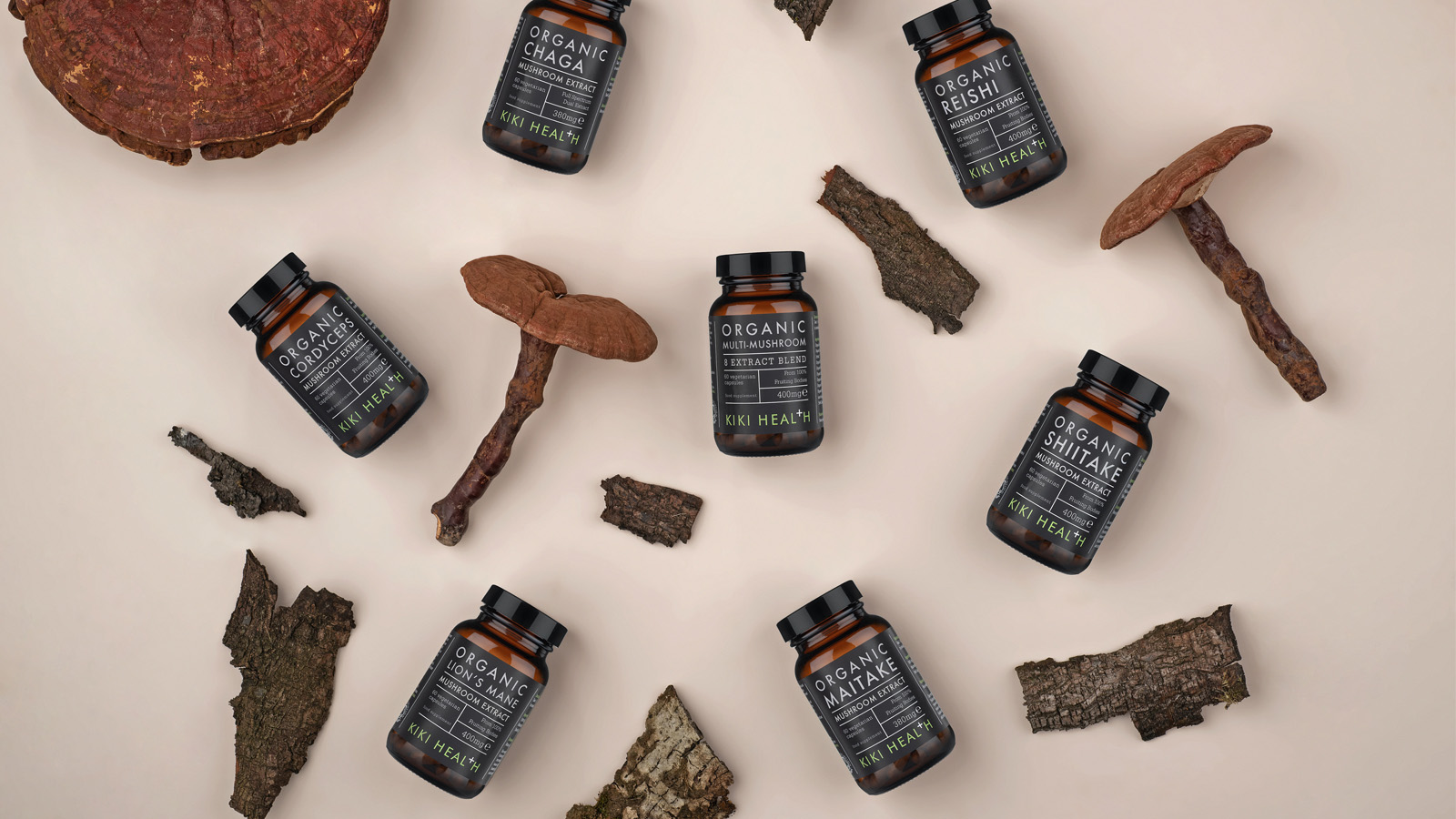
Meanwhile, Kiki Health highlight purity. They pride themselves on organic certification and a careful drying process that protects the potency of the mushrooms without excess energy use. Their glass packaging is both recyclable and reusable—one of those small details that turns out to matter when you multiply it across thousands of bottles.
Together, these choices—clean extraction, eco-conscious packaging, localised production—chip away at the traditional problems of supplement manufacturing, from chemical waste to plastic pollution. It’s not flashy, but it is effective. And when consumers choose these kinds of products, they’re essentially voting for better systems.
How does choosing mushroom supplements connect to a wider movement towards conscious consumption?
Every purchase is a quiet little vote. When you pick up a mushroom supplement that’s been grown responsibly, packaged thoughtfully, and produced with care, you’re signalling the kind of world you want to live in. That may sound lofty for something as small as a capsule, but conscious consumption works exactly like that—small choices multiplied across millions of people.
The wider movement is growing, too. From refill shops on the high street to ethical coffee subscriptions, consumers are increasingly looking beyond price and convenience. They’re asking: where did this come from, how was it made, and what impact does it leave behind? Mushroom supplements slot neatly into that mindset. They’re not only about boosting your brain, calming your nerves, or strengthening your immunity—they’re about aligning health goals with values like sustainability and responsibility.
Could small daily choices—like swapping one supplement for another—really add up to meaningful environmental change?
It’s tempting to shrug and think: what difference does one person make? But zoom out and the maths starts to tell a different story. If thousands of people switch from plastic-heavy supplement bottles to glass or compostable pouches, that’s tonnes of single-use plastic avoided each year. If farms adopt fungi-based cultivation that uses less land and water, we start easing pressure on fragile ecosystems.
On an individual level, it may feel subtle—like trading in your old trainers for a pair made with recycled materials. But combine those actions across a community, a city, or a country, and suddenly you’ve got momentum. That’s the essence of environmental change: tiny, everyday habits that snowball into cultural shifts.
And here’s the kicker—those choices aren’t sacrifices. You’re not giving something up; you’re gaining a supplement that supports your wellbeing while also leaving a lighter footprint. It’s health with a halo effect, nourishing both you and the world around you.
Medical Disclaimer:
Food supplements should not be used as a substitute for a varied and balanced diet and are not intended to diagnose, treat, cure or prevent any ailments.
This website contains general information about food supplements. The information is not advice and should not be treated as such. All content, including text, graphics, images and information available through this website, is for general information purposes only. bodykind makes no representation and assumes no responsibility for the accuracy of the information available through this website, and such information is subject to change without notice.
bodykind does not recommend, endorse or make any representation about the efficacy, appropriateness or suitability of any specific tests, products, procedures, treatments or other information that may be contained on or available through this website.
You must not rely on the information on this website as an alternative to medical advice from your doctor or other professional healthcare providers. You should consult your doctor or other professional healthcare providers if you have any specific questions about any medical matter. You should seek immediate medical attention if you think you may be suffering from any medical condition. You should never delay seeking medical advice, disregard medical advice, or discontinue medical treatment because of information on this website.

Comments are closed here.